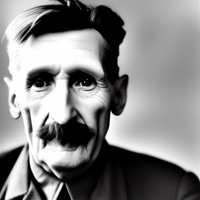
George Orwell
George Orwell, born Eric Arthur Blair on June 25, 1903, in Motihari, India, is regarded as one of the most influential writers of the 20th century. His works, including Animal Farm and Nineteen Eighty-Four, continue to resonate with readers worldwide, highlighting his unwavering commitment to truth, freedom, and the dangers of totalitarianism.
Orwell's writing career was marked by a deep sense of social justice and a desire to expose the abuses of power. He used his works as a medium to critique the oppressive systems and ideologies of his time. Through his powerful narratives, Orwell warned against the dangers of authoritarianism, propaganda, and the erosion of individual freedoms.
In Animal Farm, published in 1945, Orwell masterfully uses allegory to depict the corruption of a revolution and the rise of a totalitarian regime. Through the story of farm animals overthrowing their human oppressors, he unveils the pitfalls of power and manipulation of language for political gain. His critique of totalitarianism, censorship, and the abuse of power remains relevant even today.
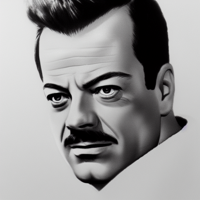
Alistair MacLean

Alistair MacLean

born on April 21, 1922, in Glasgow, Scotland, is a celebrated author known for his gripping and suspenseful novels.

Stephen King

Stephen King

a name synonymous with horror, suspense, and the supernatural, has carved an indelible niche for himself in the world of literature.
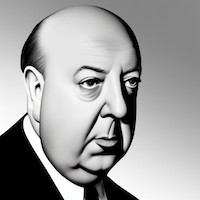
Alfred Hitchcock

Alfred Hitchcock

born on August 13, 1899, in London, England, is widely regarded as one of the greatest filmmakers in the history of cinema.

Similarly, in Nineteen Eighty-Four, Orwell paints a dystopian future where a totalitarian regime exerts complete control over its citizens, manipulating reality and eradicating individuality. It introduced concepts such as Big Brother, thought police, and doublethink, which have become popular and serve as reminders of the dangers of unchecked surveillance and government control.
Orwell's writing style is characterised by clarity, simplicity, and a keen eye for detail. His prose is accessible yet powerful, allowing readers to grasp complex ideas and connect with his messages on a visceral level. He had an uncanny ability to capture the essence of the human condition and the moral dilemmas faced by individuals caught in oppressive systems.
Beyond his novels, Orwell's essays and journalism showcased his sharp intellect and unwavering commitment to truth. He fearlessly reported on social and political issues, often challenging mainstream narratives and exposing the hypocrisies of the powerful. Orwell's critical thinking and unyielding pursuit of truth serve as an inspiration for journalists and writers today.
Orwell's legacy extends beyond his literary contributions. His concepts and ideas have permeated popular discourse, shape conversations about political power, surveillance, and the importance of individual freedoms. His writings have influenced countless individuals, inspiring them to question authority, challenge oppression, and strive for a more just and free society.
In conclusion, George Orwell's literary works continue to resonate with readers around the world. Through his powerful narratives and incisive critiques, he exposed the dangers of totalitarianism, propaganda, and the erosion of individual freedoms.
Orwell's commitment to truth and his ability to distill complex ideas into accessible prose make him a timeless voice for justice and freedom. His legacy serves as a reminder of the enduring power of literature in challenging oppressive systems and inspiring positive change.
Explore All