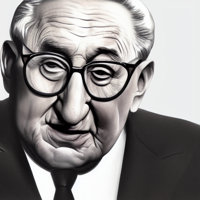
Henry Kissinger
Henry Kissinger, born on May 27, 1923, in Fürth, Germany, is a prominent American diplomat and political scientist. As one of the most influential figures in U.S. foreign policy, Kissinger's career has been marked by both admiration and controversy. He played a pivotal role in shaping American diplomacy during the Cold War era and beyond.
Kissinger's journey to prominence began in academia, where he taught at Harvard University and authored influential books on international relations. His expertise and intellectual acumen caught the attention of political leaders, and he was appointed as National Security Advisor and later as Secretary of State under Presidents Richard Nixon and Gerald Ford.
As National Security Advisor from 1969 to 1975, Kissinger played a central role in crafting U.S. foreign policy during the Vietnam War and the détente with the Soviet Union. He was a key architect of the policy of realpolitik, practical considerations over ideology in international relations, balancing global power dynamics and advance U.S. interests through pragmatic diplomacy.
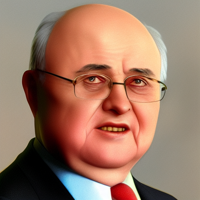
Mikhail Gorbachev

Mikhail Gorbachev

born on March 2, 1931, in Privolnoye, Russia, is a renowned figure in world history who played a pivotal role in shaping the late 20th century.
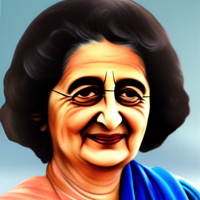
Indira Gandhi

Indira Gandhi

the first and only female Prime Minister of India, was a trailblazing leader who played a significant role in shaping the nation's political landscape.
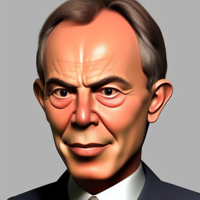
Tony Blair

Tony Blair

born on May 6, 1953, in Edinburgh, Scotland, is a transformative leader in British politics who left an indelible mark on the United Kingdom.

Kissinger's most significant diplomatic achievement was his involvement in the negotiation of the Paris Peace Accords in 1973, which helped bring an end to the Vietnam War. For this effort, he was awarded the Nobel Peace Prize, alongside North Vietnamese negotiator Le Duc Tho. However, Le Duc Tho declined the award, citing a lack of true peace in the region.
Despite his successes, Kissinger's tenure was not without controversy. Critics accused him of supporting policies that led to the overthrow of democratically elected governments in Chile and other countries in Latin America. The secret bombing campaign in Cambodia during the Vietnam War also sparked heated debates and anti-war protests.
Kissinger's involvement in clandestine operations and his use of diplomacy as a tool of geopolitical advantage raised ethical and moral concerns. Some critics have accused him of prioritising strategic interests over human rights, leading to human suffering and destabilisation in certain regions. Furthermore, his role in the Nixon administration during the Watergate scandal tarnished his reputation.
Allegations of illegal wiretapping and covert operations raised questions about his adherence to democratic principles and transparency. Kissinger's legacy remains a subject of debate among historians and scholars. Some view him as a master strategist who skillfuly navigated through complex international challenges and helped prevent all-out war during the Cold War.
Others argue that his policies had negative consequences for human rights and global stability. In later years, he continued to be an influential voice on international affairs, offering insights and counsel to subsequent administrations. Despite criticisms, he remains an important figure in American diplomatic history, and his ideas continue to shape discussions on foreign policy.
In conclusion, Henry Kissinger's career as a diplomat and political scientist is marked by both significant achievements and controversy. As a complex and influential figure, Kissinger's legacy continues to provoke discussion and analysis, reflecting the complexities of navigating global politics and diplomacy.
Explore All