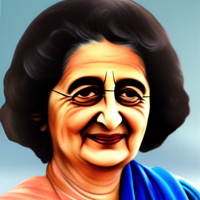
Indira Gandhi
Indira Gandhi, the first and only female Prime Minister of India, was a trailblazing leader who played a significant role in shaping the nation's political landscape. Born on November 19, 1917, in Allahabad, India, Gandhi's leadership during a crucial period in India's history left a profound impact on the country's socio-political fabric.
Gandhi's political journey was influenced by her family's deep involvement in the Indian National Congress party, which played a pivotal role in India's struggle for independence. As the daughter of Jawaharlal Nehru, India's first Prime Minister, she was exposed to the challenges and aspirations of a newly independent nation from an early age. She became Prime Minister in 1966.
She faced challenges like widespread poverty, social inequality, and regional tensions. Her leadership was characterised by a strong commitment to socialism, secularism, and the empowerment of marginalised communities. She initiated sweeping reforms in the realms of land redistribution, nationalisation of industries, and expansion of public sector enterprises.
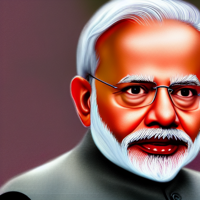
Narendra Modi

Narendra Modi

born on September 17, 1950, is the current Prime Minister of India and known for his charismatic leadership and dynamic approach.

Mahatma Gandhi

Mahatma Gandhi

born in Porbandar, India, on October 2, was a prominent leader of India's independence movement against British colonial rule.
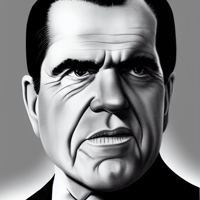
Richard Nixon

Richard Nixon

born on January 9, 1913, in Yorba Linda, California, was the 37th President of the United States, who served from 1969 to 1974.

Gandhi's leadership during the 1971 Indo-Pak war, which led to the creation of Bangladesh, showcased her strong-willed determination and strategic acumen. Her decisive actions and unwavering support for Bangladesh's independence solidified her position as a charismatic leader on the global stage.
However, Gandhi's tenure was not without controversy. The imposition of a state of emergency in 1975, which resulted in a suspension of civil liberties, drew criticism both domestically and internationally. It witnessed notable achievements in infrastructure development and family planning but was marred by allegations of human rights abuses and suppression of dissent.
Gandhi's political legacy lead to her tragic assassination. In 1984, following Operation Blue Star, a military operation aimed at flushing out Sikh militants from the Golden Temple in Amritsar, she was assassinated by her own Sikh bodyguards. Her death sparked widespread violence and tensions across the country, leaving a scar on the nation's collective memory.
Despite the controversies and challenges, her contributions to India's progress and the empowerment of women remain significant. She was a trailblazer, shattering gender stereotypes and becoming a role model for women in politics. Her leadership paved the way for subsequent female leaders in India and inspired women worldwide to actively participate in politics and governance.
Golden Temple
In conclusion, Indira Gandhi's leadership as India's Prime Minister left an indelible mark on the nation's history. Her bold vision for a more egalitarian society, combined with her strategic prowess on the global stage, positioned India as a prominent player in international affairs. Her legacy as a pioneering female leader and her contributions to the nation's progress continue to resonate today.
Explore All