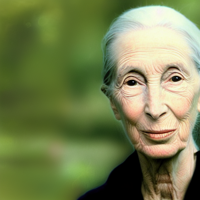

Jane Goodall
Jane Goodall, born on April 3, 1934, in London, England, is a renowned primatologist and anthropologist who has dedicated her life to studying and preserving the natural world. Her groundbreaking work with chimpanzees has not only transformed our understanding of these creatures but also inspired a global movement for conservation and animal welfare.
Her journey began in the 1960s when she embarked on an unprecedented study of wild chimpanzees in Gombe Stream National Park, Tanzania. Her immersive approach to observing these primates allowed her to make remarkable discoveries about their behaviours, social structures, and tool use. Her work shattered previously held beliefs about the uniqueness of human traits.
It highlighted the close evolutionary connection between humans and chimpanzees. Goodall's pioneering research also emphasised the importance of protecting habitats and species in their natural environments. Her observations of the threats faced by chimpanzee populations, such as habitat destruction and poaching, spurred her into action.
Greta Thunberg

Greta Thunberg

born on January 3, 2003, in Stockholm, Sweden, is a young climate activist whose dedication to environmental advocacy has inspired a global movement.
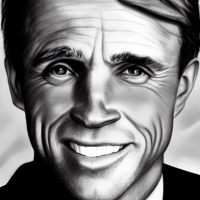
Robert-F-Kennedy-Jr

Robert-F-Kennedy-Jr

born on January 17, 1954, is an influential figure in the realm of environmental activism and the preservation of natural resources.

Al Gore

Al Gore

born on March 31, 1948, in Washington, D.C., is known for his environmental advocacy and dedication to addressing the challenges of climate change.

In 1977, she founded the Jane Goodall Institute to support research, conservation, and education efforts worldwide. Beyond her scientific contributions, Goodall's approach to conservation transcends the boundaries of academia. She has used her platform to engage with people of all ages, inspiring them to take action for the environment.
Her tireless advocacy has focused on raising awareness about environmental challenges, promoting sustainable practices, and empowering individuals to make a positive impact. Goodall's philosophy is rooted in a deep respect for all forms of life. Her holistic approach to conservation considers the interconnectedness of humans, animals, and the environment.
Her belief in the power of empathy and compassion has inspired countless individuals to reevaluate their relationship with the natural world. In recent years, Goodall has expanded her efforts to address global issues such as climate change and biodiversity loss. She continues to travel the world, speaking to audiences and meeting with leaders.
She also participates in initiatives aimed at safeguarding the planet's future. Jane Goodall's legacy is a testament to the capacity of one individual to effect change on a global scale. Her journey from a young woman with a passion for animals to an internationally recognised conservation icon reflects the transformative potential of dedication and purpose.
Her work reminds us that we all have a role to play in protecting the Earth's biodiversity and ensuring a sustainable future. In conclusion, Jane Goodall's life and contributions have transcended boundaries, leaving an indelible mark on the fields of primatology and conservation. Her pioneering research and advocacy have deepened our understanding of chimpanzees.
It has also ignited a broader movement for environmental awareness and action. Goodall's legacy serves as a beacon of hope, inspiring us to recognise our responsibility as stewards of the planet and encouraging us to work collectively for a more harmonious coexistence with nature.
Explore All