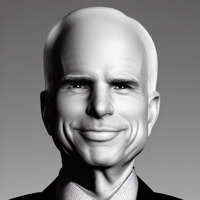
John McCain
John McCain, born on August 29, 1936, in Coco Solo, Panama Canal Zone, was a revered American statesman and military hero known for his integrity, courage, and unwavering dedication to his country. Throughout his life, McCain's remarkable journey took him from a prisoner of war in Vietnam to becoming a prominent political figure and a symbol of bipartisanship in the United States.
McCain's military service played a significant role in shaping his character. He attended the United States Naval Academy and became a naval aviator, serving in the Vietnam War. Tragically, his plane was shot down during a bombing mission in 1967, and he was captured and held as a prisoner of war for over five years. He endured torture and hardships during captivity.
Despite this his resilience and refusal to be released ahead of other prisoners earned him the admiration and respect of his fellow POWs. After his release and return to the United States, McCain continued his military service before retiring as a captain in 1981. He then embarked on a political career, serving as a representative from Arizona in the U.S. House of Representatives.
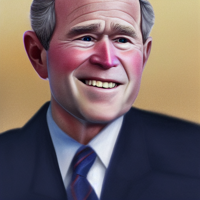
George Bush

George Bush

born on July 6, 1946, is an American politician who served as the 43rd President of the United States from 2001 to 2009.
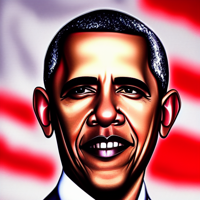
Barack Obama

Barack Obama

born on August 4, 1961, is an American politician and the 44th President of the United States, from 2009 to 2017.
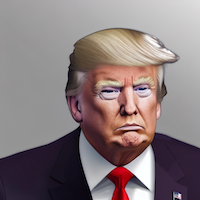
Donald Trump

Donald Trump

is an American politician, media personality, and businessman who served as the 45th President of the United States from 2017 to 2021.

He was elected to the U.S. Senate in 1986. Throughout his time in Congress, McCain earned a reputation as a maverick politician who prioritised principles over party loyalty. He was known for his independent thinking, often reaching across the aisle to work with Democrats on key issues. He was committed to bipartisanship and willing to find common ground with political opponents.
This set him apart in an increasingly polarised political landscape. McCain's foreign policy expertise and strong stance on national defence made him a respected voice on the world stage. He was an advocate for a strong military and took a principled approach to American foreign policy, always putting the interests of the nation above partisan concerns.
In 2000, McCain ran for the Republican presidential nomination, gaining popularity for his Straight Talk Express campaign, which emphasised honesty and transparency. Although he was not successful in securing the nomination, his candidacy resonated with many Americans who admired his authenticity and straightforwardness.
In 2008, McCain ran for the presidency again, this time becoming the Republican nominee. He chose Sarah Palin as his running mate, making history by selecting the first female vice-presidential candidate for the Republican Party. Although he lost the election to Barack Obama, McCain continued to serve as a respected senator and a prominent voice in national politics.
Beyond his political achievements, McCain's battle with brain cancer in his final years showcased his bravery and resilience once again. Despite his illness, he remained dedicated to his duties as a senator and continued to advocate for causes close to his heart. John McCain's passing on August 25, 2018, marked the end of an era in American politics.
His legacy as a war hero, a principled and independent politician, and a symbol of unity and bipartisanship lives on. He will be remembered for his courage, his integrity, and his commitment to putting country above all else. As Americans reflect on his legacy, John McCain will forever be regarded as a true hero and a statesman who embodied the best of what it means to serve the nation.
Explore All