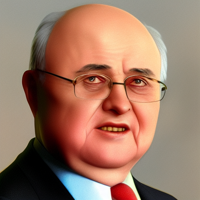
Mikhail Gorbachev
Mikhail Gorbachev is a renowned figure in world history who played a pivotal
 role in shaping the late 20th century. Born on March 2, 1931, in Privolnoye,
 Russia, Gorbachev rose through the ranks of the Soviet Union's political
 hierarchy to become the General Secretary of the Communist Party and
 ultimately the last leader of the Soviet Union.
Gorbachev assumed
 power in 1985 at a time when the Soviet Union faced deep-rooted economic
 stagnation, political rigidity, and growing disillusionment among its citizens. Recognising the need for reform, he introduced a series of groundbreaking policies that would have
 far-reaching implications for global politics.
One of Gorbachev's most significant contributions was the policy of glasnost, meaning openness. This policy aimed to foster transparency and freedom of expression within the Soviet Union. It encouraged public discussion, loosened restrictions on the media, and allowed for a more open exchange of ideas. Glasnost sparked a wave of political and cultural reforms.
Vladimir Putin

Vladimir Putin

born on October 7, 1952, is a Russian politician who has served as the President of Russia for multiple terms with his assertive leadership style and influence.
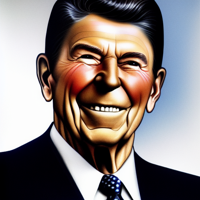
Ronald Reagan

Ronald Reagan

the 40th President of the United States, served from 1981 to 1989 and left an indelible mark on American history.
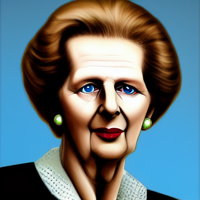
Margaret Thatcher

Margaret Thatcher

born on October 13, 1925, was a prominent British politician who served as the Prime Minister of the United Kingdom from 1979 to 1990.

Another vital aspect of Gorbachev's reform agenda was perestroika, meaning
 restructuring. Perestroika sought to introduce elements of market-oriented reforms, decentralise decision-making, and encourage private initiatives. However, the transition  proved challenging and faced resistance from vested interests, leading to economic turbulence and social unrest.
Gorbachev's commitment to peace, disarmament and reduce the threat of nuclear power earned him international acclaim and the Nobel Peace Prize in 1990. He engaged in strategic arms reduction talks with the United States, leading to landmark agreements such as the Intermediate-Range Nuclear Forces Treaty (INF) and the Strategic Arms Reduction Treaty (START).
However, Gorbachev's reforms faced significant opposition from hardliners within the Soviet establishment. As the pace of change accelerated, discontent grew among conservative elements, leading to a failed coup attempt in 1991. Gorbachev's resilience and popular support allowed him to persevere and continue his reform agenda.
Despite his efforts, the Soviet Union dissolved in 1991. Gorbachev's leadership during this tumultuous period was crucial in managing the transition and ensuring a relatively peaceful dissolution of the Soviet Union. The Commonwealth of Independent States (CIS), an idea he championed, allowed former Soviet republics to maintain some level of cooperation and stability.
Gorbachev's contributions were both transformative and controversial, and his leadership marked a turning point in global politics. While his reforms brought much-needed change to the Soviet Union and set the stage for democratic transitions in Eastern Europe, they also unleashed political and economic forces that led to significant upheaval and challenges.
Gorbachev's leadership played a critical role in shaping the trajectory of the late 20th century and continues to be widely discussed and analyzed today. Gorbachev's legacy is complex and remains a subject of debate. His leadership as the General Secretary of the Communist Party and the last leader of the Soviet Union left an indelible mark on history.
Explore All