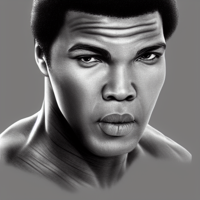
Muhammad Ali
Muhammad Ali, born Cassius Marcellus Clay Jr. on January 17, 1942, in Louisville, Kentucky, is one of the most celebrated and iconic athletes in the history of sports. Beyond his accomplishments in the boxing ring, Ali's impact on society and culture transcended the world of sports, making him a global symbol of resilience, courage, and social justice.
Ali's boxing career began at the age of 12, under the guidance of Joe Martin, a local police officer and boxing coach. He quickly demonstrated immense talent and dedication to the sport, eventually earning a gold medal at the 1960 Rome Olympics in the light heavyweight division. Ali showed extraordinary boxing skills, agility, and a flair for showmanship.
His unorthodox fighting style, lightning-fast footwork, and the ability to float like a butterfly, sting like a bee made him a force to be reckoned with inside the ring. In 1964, Ali won his first world heavyweight title by defeating Sonny Liston in a stunning upset, marking the beginning of a legendary boxing career that would see him become a 3-time world heavyweight champion.
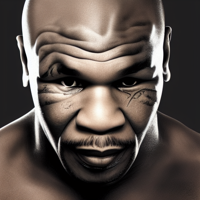
Mike Tyson

Mike Tyson

born on June 30, 1966, in Brooklyn, New York, is the story of a man's journey through success, struggle, and redemption.
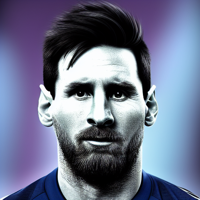
Lionel Messi

Lionel Messi

was born on June 24, 1987, in Rosario, Argentina. His goal-scoring ability and mesmerising skills have made him one of the greatest footballers of all time.
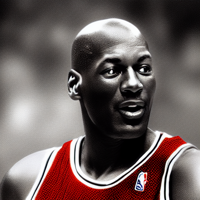
Michael Jordan

Michael Jordan

born on February 17, 1963, in Brooklyn, New York, is an iconic figure in the world of sports, particularly basketball.

Beyond his athletic prowess, Ali was also known for his outspoken personality and strong social and political views. In 1967, he refused to be drafted into the U.S. military during the Vietnam War, citing religious beliefs and opposition to the war. This principled stand led to his arrest and suspension from boxing, stripping him of his heavyweight titles.
However, Ali's refusal to compromise only solidified his status as a cultural icon and a symbol of resistance against injustice. In 1971, the Supreme Court overturned Ali's conviction, allowing him to return to the ring. He reclaimed the heavyweight title in memorable matches against George Foreman and Joe Frazier, earning him the nickname The Greatest of All Time or The Greatest.
Ali's charisma and social activism extended beyond boxing. He used his platform to advocate for civil rights, racial equality, and religious freedom. His willingness to speak out against racial injustice and inequality during a time of intense social unrest in the United States inspired countless individuals and ignited conversations about racial prejudice and social justice.
Throughout his life, Ali faced both adoration and controversy. His polarising personality and willingness to challenge societal norms earned him admirers and detractors alike. However, his impact on popular culture and the global stage cannot be denied. In later years, Ali faced a different kind of fight - Parkinson's disease, which he battled for more than three decades.
Despite his physical decline, he continued to make public appearances, using his presence to raise awareness and support various charitable causes. In conclusion, Ali's legacy goes far beyond his achievements in the boxing ring. He was a champion both inside and outside of the ring, inspiring generations with his unparalleled skill, determination, and commitment to social justice.
Ali's influence as an athlete, activist, and cultural icon continues to reverberate across the world, making him a symbol of strength, resilience, and the power of standing up for one's beliefs. He will forever be remembered as The Greatest not just in the realm of sports but also as a champion of human rights and a beacon of hope for millions around the globe.
Explore All