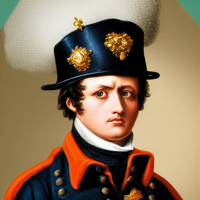
Napoleon Bonaparte
Napoleon Bonaparte was born  on 15 August 1769, in Corsica was a French military commander and political leader who rose to prominence during the French Revolution and led successful campaigns during the Revolutionary Wars. His impact on European history and his legacy as a military genius and ambitious ruler are still widely studied and debated today.
Napoleon's military career began during the French Revolution, where he quickly gained recognition for his tactical prowess and leadership skills. He played a crucial role in several successful military campaigns, including the Italian and Egyptian campaigns, which solidified his reputation as a brilliant military strategist.
Napoleon's military career began during the French Revolution, where he quickly gained recognition for his tactical prowess and leadership skills. He played a crucial role in several successful military campaigns, including the Italian and Egyptian, which solidified his reputation as a brilliant military strategist. In 1799, he seized power and established himself as the First Consul.
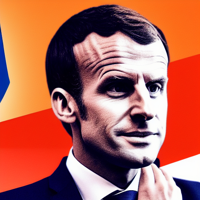
Emmanuel Macron

Emmanuel Macron

born on December 21, 1977, in Amiens, France, President of France since 2017, has emerged as a significant figure in contemporary French politics.
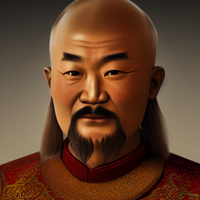
Genghis Khan

Genghis Khan

born as Temüjin in the early 1160s in the harsh steppes of Mongolia, was the founder and ruler of the Mongol Empire, one of the largest empires in history.
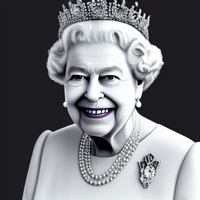
Queen Elizabeth

Queen Elizabeth

born on April 21, 1926, was Queen of the United Kingdom and other Commonwealth realms until her death in 2022. She ascended to the throne on February 6, 1952.

He later declared himself Emperor of the French in 1804. As ruler, he introduced a series of significant reforms known as the Napoleonic Code. This legal framework emphasised equality before the law, property rights, and religious tolerance. It served as a foundation for many modern legal systems across the world. His military conquests reshaped the political map of Europe.
His campaigns extended French influence and control across much of continental Europe, reaching as far as Russia and Egypt. Through a combination of military might and strategic alliances, Napoleon created the French Empire and appointed family members and supporters as rulers in conquered territories. However, his ambitious expansionist policies eventually led to his downfall.
His failed invasion of Russia in 1812 marked a turning point in his military career, as it exposed the vulnerability of his forces and eroded his support. European powers rallied against him, and he was ultimately defeated in the Battle of Waterloo in 1815. Napoleon was subsequently exiled to the island of Saint Helena, where he died on May 5, 1821.
Napoleon's impact on Europe and the world cannot be understated. He brought about significant political, legal, and social changes through his reforms and the spread of the Napoleonic Code. His military strategies and tactics influenced warfare for years to come. His rise to power and his attempts to establish a lasting empire also contributed to the emergence of nationalism across Europe.
The legacy of Napoleon remains a subject of intense fascination and debate. While some view him as a visionary leader and a champion of progressive ideas, others criticise his autocratic rule and the immense human cost of his conquests. Nevertheless, his impact on history is undeniable, and his name continues to evoke admiration and controversy.
In conclusion, Napoleon Bonaparte's military genius, political leadership, and far-reaching reforms have left an indelible mark on European history. His rise to power, his military conquests, and his ambitious vision for France and Europe continue to captivate historians and scholars. As a hero or a tyrant, his legacy as a transformative figure in the annals of history is certain to endure.
Explore All