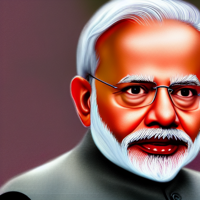
Narendra Modi
Narendra Modi, born on September 17, 1950, is an Indian politician and the current Prime Minister of India. Known for his charismatic leadership and dynamic approach, he has made a significant impact on the political landscape of India. His journey in politics began in the early 1980s when he joined the RSS, a right-wing Hindu nationalist organisation.
He rose through the ranks and eventually became the Chief Minister of Gujarat in 2001. During his tenure as Chief Minister, Modi implemented several reforms that led to rapid economic development and infrastructure growth in the state. His focus on business-friendly policies attracted investments and contributed to Gujarat's overall progress.
In 2014, Modi led the Bharatiya Janata Party (BJP) to a resounding victory in the Indian general elections, securing a majority in the Lok Sabha, the lower house of Parliament. He was sworn in as the 14th Prime Minister of India, promising to bring about positive change and transform the nation. As Prime Minister, Modi has pursued an ambitious agenda.
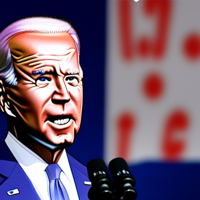
Joe Biden

Joe Biden

born on November 20, 1942, the 46th President of the United States, is a veteran politician and statesman who has dedicated his career to public service.

Vladimir Putin

Vladimir Putin

born on October 7, 1952, is a Russian politician who has served as the President of Russia for multiple terms with his assertive leadership style and influence.
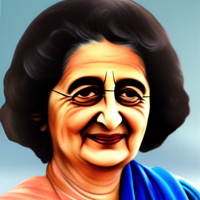
Indira Gandhi

Indira Gandhi

the first and only female Prime Minister of India, was a trailblazing leader who played a significant role in shaping the nation's political landscape.

He has focused on economic development, infrastructure improvement, and social welfare. He launched initiatives such as Make in India, which aims to boost manufacturing and job creation, and Digital India, which seeks to harness technology for inclusive growth. Modi has also implemented social welfare schemes.
The Pradhan Mantri Jan Dhan Yojana, provides financial inclusion to millions of the underprivileged and Swachh Bharat Abhiyan, is a nationwide cleanliness campaign. Modi's foreign policy has also been noteworthy. He has actively engaged with world leaders, promoting Indias interests on the global stage.
He has sought to strengthen diplomatic ties, attract foreign investment, and elevate India's standing as a major player in international affairs. Under his leadership, India has been increasingly seen as a key strategic partner in various multilateral forums. Despite his achievements, Modi's tenure has not been without controversies.
Critics have accused his government of curtailing civil liberties, polarizing the society, and mishandling certain socio-economic issues. However, his supporters point to his decisive leadership, commitment to development, and efforts to combat corruption as evidence of his dedication to serving the nation's interests.
In conclusion, Narendra Modi's leadership as the Prime Minister of India has been marked by a strong focus on economic development, social welfare, and global engagement. His efforts to bring about transformative changes in various sectors have left a lasting impact on the country.
While his policies have garnered both praise and criticism, there is no denying that Modi has emerged as a dominant figure in Indian politics, shaping the nation's trajectory and leaving an indelible mark on its history.
Explore All