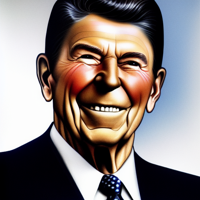
Ronald Reagan
Ronald Reagan, the 40th President of the United States, served from 1981 to 1989 and left an indelible mark on American history. Born on February 6, 1911, in Tampico, Illinois, Reagan's presidency was defined by his conservative ideology, strong leadership, and remarkable communication skills. Reagan's journey to the White House was unconventional.
Before entering politics, he was a successful actor in Hollywood, starring in numerous films and television shows. However, it was his passion for politics that eventually led him to a career in public service. Reagan's political rise began in the 1960s when he served as the Governor of California. As governor, he displayed a conservative vision for governance.
He emphasised limited government, lower taxes, and strong national defence. In 1980, Reagan ran for the presidency, and his message of restoring America's strength and reviving the economy resonated with many Americans. His effective communication skills and optimistic demeanour earned him the nickname The Great Communicator.
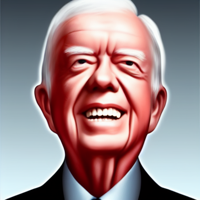
Jimmy Carter

Jimmy Carter

born on October 1, 1924, in Plains, Georgia, the 39th President of the United States is statesman, humanitarian, and advocate for change.
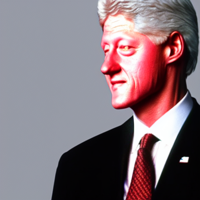
Bill Clinton

Bill Clinton

is an American politician who served as the 42nd president of the United States from 1993 to 2001. He previously served as governor of Arkansas.

Donald Trump

Donald Trump

is an American politician, media personality, and businessman who served as the 45th President of the United States from 2017 to 2021.

As President, he pursued a conservative agenda, aiming to reduce government intervention in the economy and promote individual liberty. He advocated for tax cuts and deregulation. His economic policies, known as Reaganomics, aimed to spur economic growth and job creation. One of his most significant accomplishments was his role in ending the Cold War.
He believed in standing firm against the Soviet Union and played a pivotal role in increasing military spending to counter their influence. Reagan's unwavering stance on the Soviet Union, coupled with diplomatic efforts, contributed to the eventual collapse of the communist regime and the end of the Cold War.
Reagan's ability to communicate effectively with the American people was a key element of his leadership. He had a remarkable talent for connecting with voters, delivering speeches that resonated with their values and aspirations. His optimism and confidence inspired hope in the face of challenges, particularly during the difficult times of the early 1980s recession.
However, Reagan's presidency was not without controversy. Critics argued that his domestic policies favoured the wealthy and led to increased income inequality. Additionally, his administration faced scrutiny for the Iran-Contra affair, a scandal involving the covert sale of arms to Iran and the use of proceeds to fund anti-communist rebels in Nicaragua.
Despite these challenges, his popularity remained strong throughout his presidency. He won re-election in 1984 in a landslide victory, carrying 49 out of 50 states. In conclusion, Reagan's presidency left a lasting impact on the United States. His conservative policies, emphasis on individual freedom, and strong leadership helped shape the nation during a critical period of history.
The Great Communicator, Reagan's ability to connect with the American people and inspire confidence in the face of adversity contributed to his popularity and effectiveness as a leader. While his presidency faced challenges and controversy, Reagan's legacy as a transformative figure in American politics endures, and his impact on the nation's direction will be remembered for generations to come.
Explore All