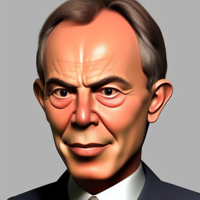
Tony Blair
Tony Blair, born on May 6, 1953, in Edinburgh, Scotland, is a transformative leader in British politics who left an indelible mark on the United Kingdom. As the Prime Minister of the United Kingdom from 1997 to 2007, his charismatic personality, pragmatic approach, and vision for a modernised Britain made him a highly influential and controversial figure.
Blair's tenure as Prime Minister was characterised by the Third Way ideology, which sought to bridge the gap between traditional left and right wing politics. He pursued a range of reforms across various sectors and  focussed on improving public services, increasing access to education, and reducing poverty to create a fairer and more inclusive society.
One of Blair's most significant achievements was his role in the Northern Ireland peace process. Through his efforts, the Good Friday Agreement was reached in 1998, bringing an end to decades of conflict in the region. Blair's determination, negotiation skills, and ability to bring together opposing factions helped foster a new era of peace and reconciliation in Northern Ireland.
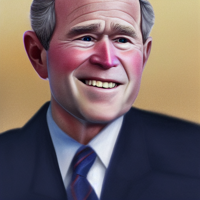
George Bush

George Bush

born on July 6, 1946, is an American politician who served as the 43rd President of the United States from 2001 to 2009.
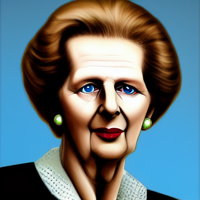
Margaret Thatcher

Margaret Thatcher

born on October 13, 1925, was a prominent British politician who served as the Prime Minister of the United Kingdom from 1979 to 1990.
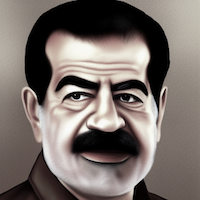
Saddam Hussein

Saddam Hussein

born on April 28, 1937, in Al-Awja, Iraq. His rise to power, brutal regime, and eventual downfall mark a complex chapter in the history of Iraq.

Blair's foreign policy decisions, particularly his support for the United States-led invasion of Iraq in 2003, remain highly controversial. While he argued that the removal of Saddam Hussein was necessary to safeguard global security, the decision was met with widespread criticism. The aftermath of the Iraq War has had a lasting impact on Blair's reputation and legacy.
Moreover, Blair played a crucial role in shaping Britain's role in the European Union. He was a vocal proponent of European integration and believed in the importance of Britain's active participation in European affairs. His government's decision to adopt the euro as the national currency was, however, met with skepticism and ultimately did not materialise.
Blair's charismatic personality and powerful communication skills were instrumental in his political success. His ability to connect with the public and articulate his vision resonated with many voters. Blair's rhetoric of New Labour and his promise to bring about positive change struck a chord with those seeking a departure from traditional party politics.
In recent years, Blair has remained active in public life, particularly through his philanthropic work and involvement in global affairs. He has focused on issues such as international development, climate change, and peace-building. He establishment the Tony Blair Institute for Global Change to address global challenges and fostering dialogue on pressing issues.
In conclusion, Tony Blair's leadership as Prime Minister of the United Kingdom marked a significant period of modernisation and social reform. While his legacy is not without controversy, his commitment to social justice, peace-building, and a modernised Britain cannot be overlooked.
His presence on the global stage and his close working relationship with American President Bill Clinton contributed to his international influence.
Explore All