Vladimir Putin
Vladimir Putin, born on October 7, 1952, is a Russian politician who has served as the President of Russia for multiple terms. With his assertive leadership style and influence on domestic and international affairs, Putin has become a prominent figure in global politics. Putin's rise to power began in 1999 when he assumed the role of Prime Minister of Russia under President Boris Yeltsin.
Putin worked as a KGB foreign intelligence officer for 16 years, rising to the rank of lieutenant colonel before resigning in 1991 to begin a political career in Saint Petersburg. He moved to Moscow in 1996 to join the administration of president Boris Yeltsin. He briefly served as director of the Federal Security Service (FSB) and secretary of the Security Council of Russia.
Following Yeltsin's resignation, Putin became the acting President and was subsequently elected to the position in 2000. He served two consecutive terms until 2008, then became Prime Minister again, and returned as President in 2012. Throughout his presidency, Putin has prioritised the restoration of Russia's political stability, economic growth, and global influence.
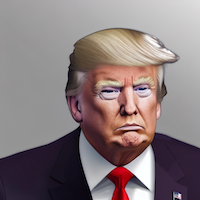
Donald Trump

Donald Trump

is an American politician, media personality, and businessman who served as the 45th President of the United States from 2017 to 2021.

Volodymyr Zelenskyy

Volodymyr Zelenskyy

born on January 25, 1978, in Kryvyi Rih, Ukraine, surprised the world by transitioning from the entertainment industry to become the President of Ukraine.
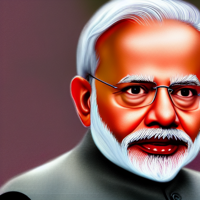
Narendra Modi

Narendra Modi

born on September 17, 1950, is the current Prime Minister of India and known for his charismatic leadership and dynamic approach.

Under his leadership, Russia has experienced significant changes and faced both praise and criticism from the international community. Economically, Putin aimed to diversify Russia's economy and reduce its dependency on oil and gas. He implemented reforms to attract foreign investment, improve infrastructure, and modernise industries.
These efforts helped stabilise the economy and fostered a period of growth, although critics argue that the benefits have not been evenly distributed and that corruption remains an issue. Putin's foreign policy approach has been characterised by a desire to protect Russia's interests and assert its influence on the global stage.
He has pursued a more assertive stance in areas such as the annexation of Crimea in 2014, which drew condemnation from many countries. He has also been involved in various conflicts, including the Syrian civil war, where Russia has supported the government of President Bashar al-Assad. His critics point to concerns over human rights, freedom of the press, and political repression.
Opposition figures and activists have faced restrictions and, in some cases, have been targeted by the government. The Kremlin's control over the media has also been a subject of criticism, with accusations of censorship and propaganda. Despite the controversies surrounding his presidency, Putin maintains a strong support base within Russia.
Many admire his leadership style, which is often characterised by a strong and assertive approach. Putin's popularity is rooted in his image as a strong leader who has brought stability and restored Russia's status as a major player in international affairs. In conclusion, Vladimir Putin's leadership has shaped Russia's political landscape and its standing on the global stage.
His policies have aimed to strengthen the country's economy, assert its influence in international affairs, and maintain domestic stability. While he has garnered both praise and criticism, Putin's impact on Russia and the world cannot be ignored. The future will continue to be shaped by his actions and decisions as he navigates the challenges and opportunities that lie ahead.
Explore All